
Last updated October 16, 2026
 AC repair
 Furnace & heating
 Heat pumps
 Ductless mini splits
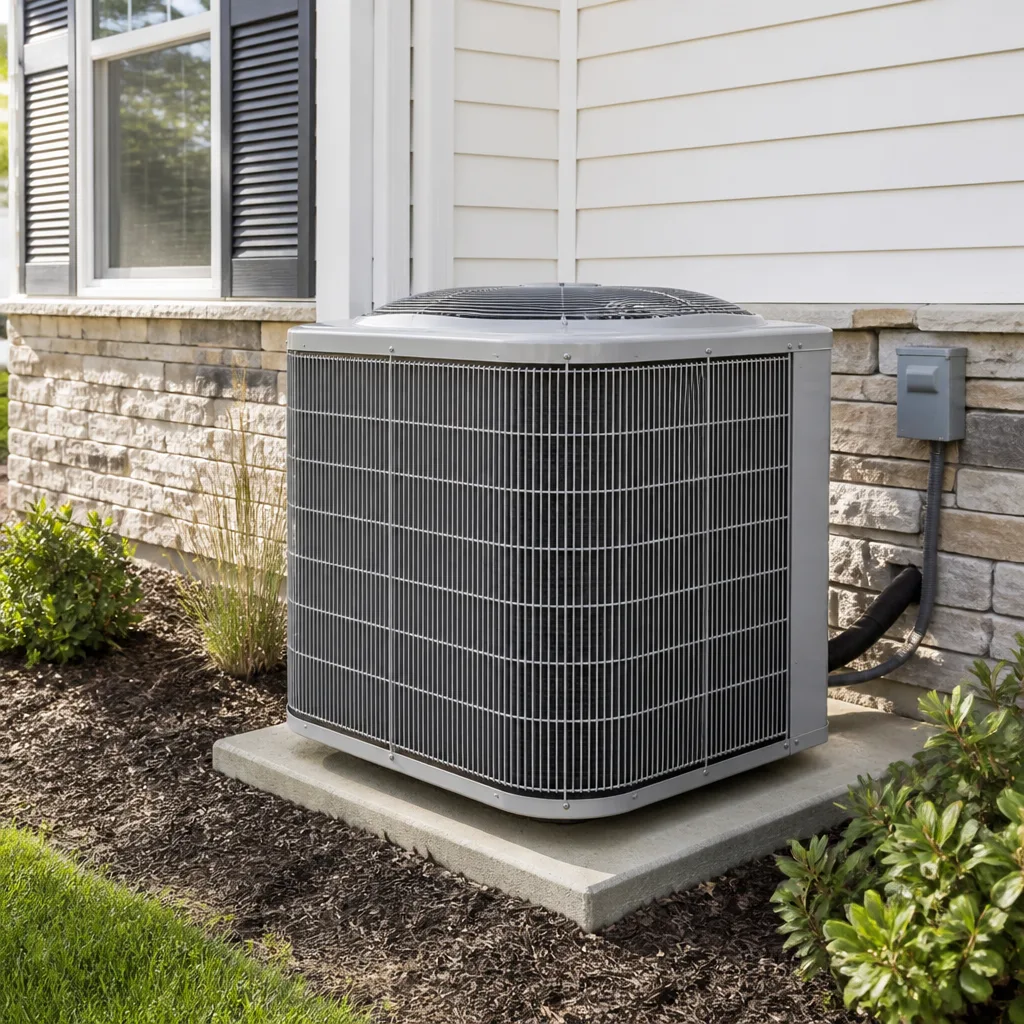 Carrier
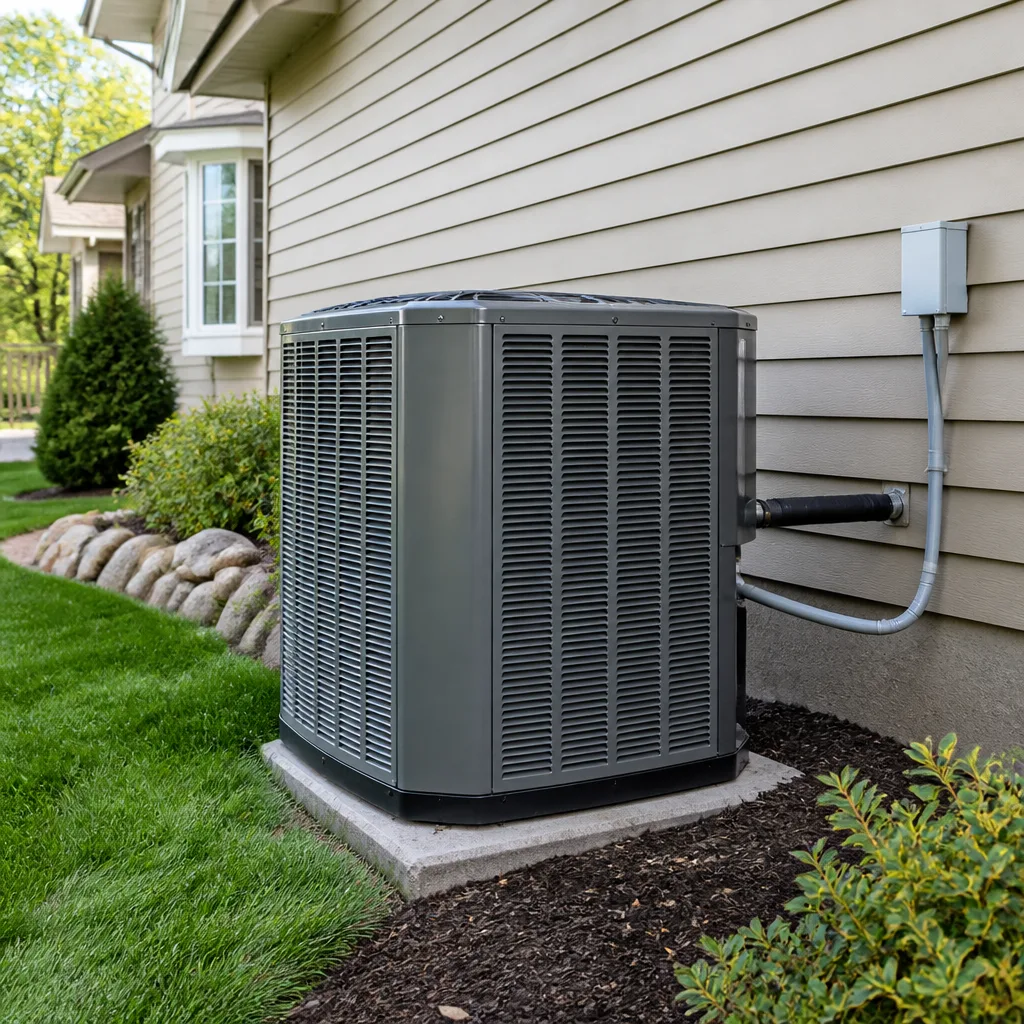 Trane
Trane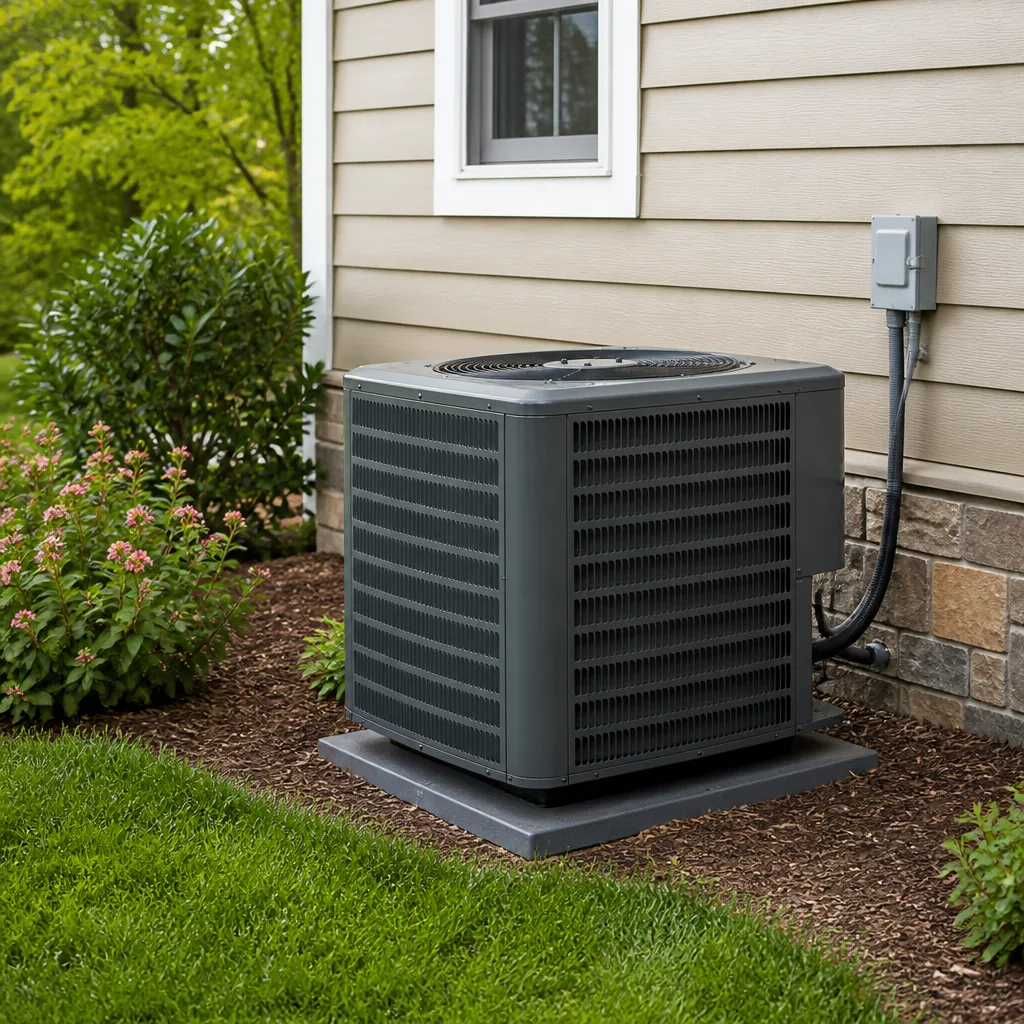 Goodman
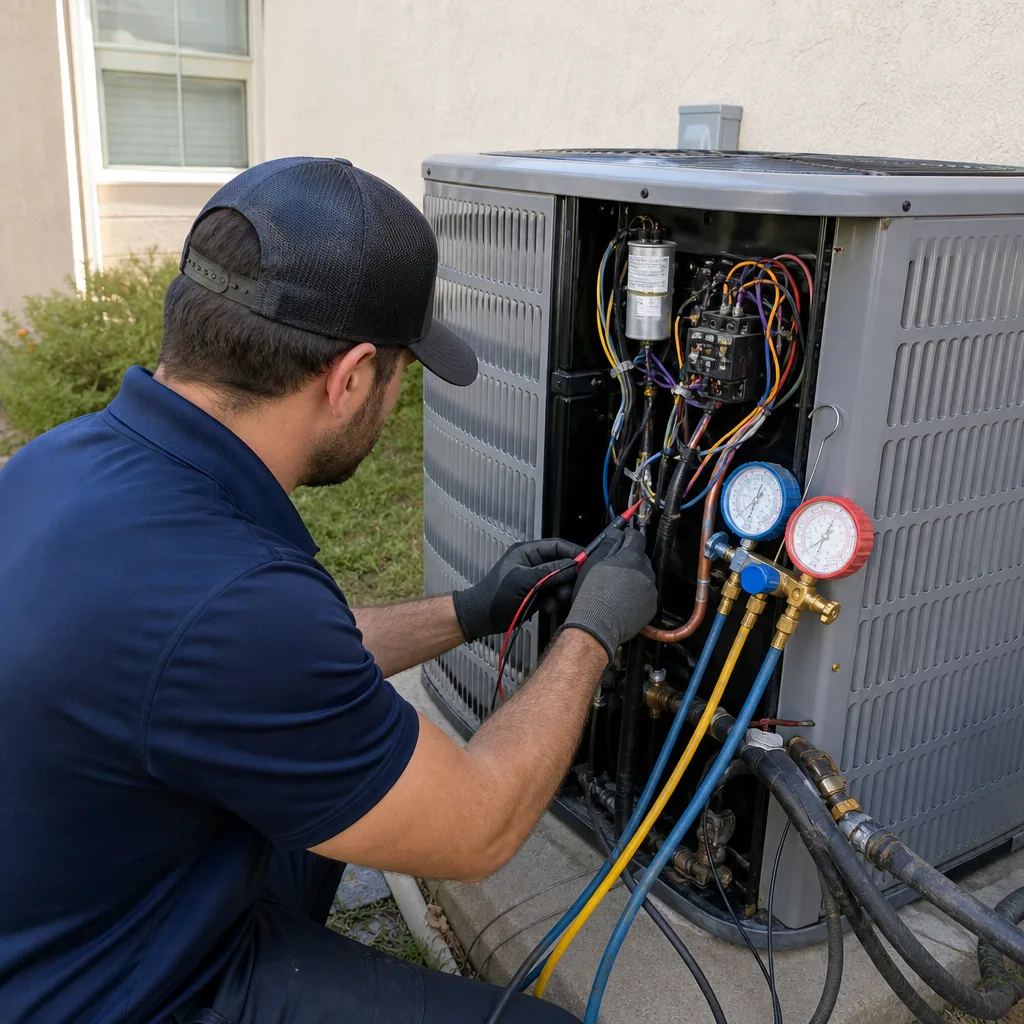
Seasonal tune-up and full diagnostic on your Carrier, Trane, or Goodman system - readings shown to you before any repair is proposed
Diagnosis first, numbers second - you approve the repair price before a single part goes in.
Get your free estimateHVAC Warning Signs: A Orlando Homeowner’s Reference Guide
Here’s something most HVAC guides won’t tell you: in Orlando, the most expensive air conditioning failure rarely starts with warm air coming from your vents. It starts as a faint smell. A mustiness you might blame on the bathroom drain. A slight film of moisture near the air handler you wipe away without thinking twice. By the time a Florida system actually stops cooling, the real problem has often been developing for six to eight weeks, silently, inside the evaporator coil or the condensate line. The repair bill hasn’t tripled yet, but it’s heading that way. This guide and our Complete Guide to HVAC in Orlando teach you to read your system the way a technician does: through smell, sound, condensation patterns, and your monthly utility bill, not just through the thermostat setting. You’ll learn what’s worth watching, what’s worth calling about today, and what’s just normal Florida humidity doing its thing.
Quick Answer
HVAC warning signs in Orlando show up differently than they do in drier climates: high humidity means you’ll often notice musty or chemical odors, water around the indoor unit, unexplained electric bill spikes, and short-cycling before you ever feel a temperature problem. The most urgent signs are a burning or electrical smell, a sulfur or gas odor, or water pooling near electrical components. A 15% or greater unexplained jump on your FPL or Duke Energy bill, a system that turns on and off every few minutes, or any smell that doesn’t go away within a day all warrant a call to a technician at Meadowsweet Heating and Air Orlando home.
Styles & brands we work with
Table of Contents
- A Florida-Specific Smell Guide: What Each Odor Actually Means
- How Your FPL or Duke Bill Can Catch a Failing System Before You Feel It
- Short-Cycling in Orlando: The Sound Your System Makes When Something’s Wrong
- Five-Minute Visual Inspection Points Around the Air Handler
- Thermostat Behavior: Failing System or Faulty Thermostat?
- Humidity Problems: When the AC Is Running but the House Feels Sticky
- Common Mistakes to Avoid
- When to Call a Professional
- Frequently Asked Questions
A Florida-Specific Smell Guide: What Each Odor Actually Means
In most parts of the country, an HVAC system that smells bad is an anomaly. In Orlando, where drainage pans stay wet and coils stay damp for months at a time, odor is often the first signal a system is failing. Here’s how to read each smell, from least to most urgent.
Musty or “Dirty Sock” Smell
A musty smell coming from your vents almost always means biological growth on the evaporator coil or inside the drain pan. In Orlando’s summer humidity, condensation never fully evaporates between cooling cycles. That persistent moisture is exactly what mold and mildew need. The smell you’re catching is not in the ducts themselves, in most cases. It’s living on the coil, and every time the blower pushes air across it, microscopic spores distribute throughout the house. This smell often comes and goes with the cooling cycle, and it’s stronger in the first minute after the blower kicks on. A clogged condensate line makes it worse by keeping the pan full of water. The sooner this is addressed, the more likely a proper coil cleaning or pan treatment solves it. The longer it sits, the more likely the coil needs replacement.
Burning Smell, Like Hot Dust or Electrical
The first time you run the heat after months of cooling only, a brief dusty smell is normal: it’s accumulated dust burning off the heat exchanger. That smell should clear within 20 to 30 minutes. But a persistent burning smell that grows stronger, or one that smells sharp and electrical rather than dusty, is an immediate concern. It can mean a failing blower motor, overheating wiring, or a capacitor on its way out. If the smell carries any hint of melting plastic, turn the system off at the thermostat and call us. We’re available around the clock at (850) 845-8659, and a live person answers no matter when you call.
Sulfur or Rotten Egg Smell
In a home that uses natural gas, a sulfur smell near the furnace or air handler is never something to troubleshoot on your own. It can indicate a gas leak in or near the heat exchanger. Turn the system off, avoid lighting anything, leave the house if the odor is strong, and call your gas utility, then call a furnace professional. This is rare, but in our two decades of furnace work across Orlando, we treat every sulfur report as an emergency until proven otherwise. Furnace Repair in Orlando is a service we provide with the same urgency we’d want for our own families.
Chemical or Sweet, Solvent-Like Smell
A chemical odor reminiscent of nail polish remover, paint thinner, or coolant is one of the most misunderstood warning signs in HVAC. That sweet, chloroform-like smell is refrigerant, and if it’s inside your home, you have a leak in the evaporator coil or in the refrigerant lines near the air handler. Refrigerant leaks don’t just reduce cooling power. They can also cause compressor failure over time as the system runs with less and less refrigerant in the circuit. A small leak becomes a big one. If you catch even a faint trace of that odor, call us. This is not one to wait on.
How Your FPL or Duke Bill Can Catch a Failing System Before You Feel It
Your monthly utility bill is the only HVAC diagnostic tool you already own. It doesn’t require opening a panel or knowing what a capacitor is. In Orlando, your cooling season runs roughly nine months out of the year, and your usage follows a predictable pattern: higher in July and August, lower in April and October. When that pattern breaks for no obvious reason, the system is telling you something.
Here’s what an unexplained bill increase means, in diagnostic terms:
- A 5-10% increase against the same month last year, with no change in thermostat habits, usually signals minor inefficiency: a slightly dirty condenser coil, an aging filter, or a small refrigerant loss building over time.
- A 15% increase or more points to something actively failing: a refrigerant leak that’s lowered the system’s cooling capacity, a failing run capacitor forcing the compressor to work harder, or a blower motor drawing more current than it should.
- A 25-30% spike that arrives with no other comfort change often means the system is running longer to hit the same temperature. In our experience, that’s most commonly a refrigerant undercharge or a compressor in early failure.
How to Do the Comparison in Five Minutes
- Pull up your last three summer bills and the same three months from last year.
- Look at the kilowatt-hour usage, not the dollar amount. Rates change. kWh is what matters.
- Ignore months where you had guests, changed your schedule, or ran the AC differently.
- If you see a 15% or greater increase you can’t explain, take the next step: check your filter and your outdoor unit, then call for a diagnostic.
One thing to know about Florida homes specifically: whole-home dehumidifiers and supplemental systems can mask a failing AC by doing part of the work for it. If you installed a dehumidifier a few years back and stopped watching your bills as closely, now’s the time to look again. The AC may be working harder than it should be, and the dehumidifier is picking up the slack.
Short-Cycling in Orlando: The Sound Your System Makes When Something’s Wrong
Watch your outdoor condenser during a normal cooling cycle. Here’s what normal looks like in Orlando in July: the unit runs for 10 to 15 minutes, shuts off for 15 to 20 minutes, then runs again. That’s the rhythm of a properly sized system moving heat out of your house on a hot afternoon. Here’s what a problem looks like: the unit runs for three to five minutes, shuts off, starts again within a few minutes, and repeats that pattern all day. That’s short-cycling, and it’s one of the clearest early warnings a cooling system can give you.
The Two Most Common Orlando-Specific Causes
1. Oversized systems. A disturbing number of homes in the Orlando area were built with AC systems sized for a colder, drier house, or upgraded by a previous owner who thought “bigger is better.” An oversized system cools the air so quickly that it satisfies the thermostat in minutes, then shuts off. The problem: the system never runs long enough to pull moisture out of the air. The house hits 74 degrees, but the air feels sticky. The coil never gets a full, steady run to shed its condensation properly, and the compressor gets hammered with start-stop cycles. Every start is the hardest moment in a compressor’s life. An oversized system wears itself out faster, and it does a poorer job of dehumidifying. Short-cycling from oversizing typically shows up within the first cooling season and continues for the life of the system.
2. Low refrigerant charge. When the system has lost refrigerant through a slow leak, the coil gets colder than it should. In a system that’s working correctly, the coil runs at a temperature that lets it absorb heat and condense moisture at the designed rate. With less refrigerant, the coil drops below freezing. The system’s safety sensors see the frozen coil, shut the compressor down to protect it, and the coil thaws. Then the cycle repeats. The sound you hear is a compressor starting and stopping far more often than it should. Low refrigerant isn’t going to fix itself. Every cycle ratchets up the wear on the compressor.
If you’re hearing short-cycling, don’t wait for the system to fail. AC Repair in Orlando with a written price before any work begins is the standard at Meadowsweet Heating and Air. Our technicians check the refrigerant charge, the sizing, and the airflow, and they explain what’s actually wrong before they touch a single component.
Five-Minute Visual Inspection Points Around the Air Handler
You don’t need a multimeter or a license to look for these three things. In most Orlando homes, the air handler sits in a closet, a garage, or an attic. We’re focusing on what you can see from the outside, without opening any panel. These checks take five minutes, and they can tell you whether you need to call someone.
1. Condensate Pan Water Color
If your air handler has a visible drain pan or if you can see into the secondary pan beneath it, look at the water. Clear water with no visible sediment is what you want. Water that’s brown, green, or has visible slime floating in it means biological growth is already established in the pan or the drain line. In Orlando’s humidity, this can happen within a single season if the pan doesn’t slope correctly or the line doesn’t drain fully. If you see dark water, take a photo, note whether there’s any overflow staining around the pan, and call for a line cleaning and pan treatment. A pan that stays damp and dark is a mold reservoir feeding the air in your home.
2. Visible Insulation Moisture
Look at the outside of the air handler and the first few feet of ductwork. In an unconditioned garage or attic, condensation can form on the outside of the cabinet or the ducts if the insulation is thin, torn, or missing. You’ll see dark patches, water beads, or a darker ring where moisture has been absorbed into the insulation. Inside the home, moisture around the air handler cabinet can indicate a sweating coil or poor airflow over the coil. That moisture doesn’t just damage the cabinet and surrounding drywall. It feeds mold. In our experience, the most common cause is a collapsed return duct or an over-full drain pan sending cooler air across surfaces that shouldn’t be that cold.
3. Filter Collapse
A filter that has bowed inward, collapsed, or been sucked out of its slot entirely is telling you the system is starving for air. This is a bigger deal than most homeowners realize. A collapsed filter means the return duct is undersized, the filter is too restrictive for the system, or the blower is working against a severe airflow restriction. The evaporator coil runs too cold, condensation builds, and the system drains improperly. Every one of these problems shortens equipment life. If your filter is bending, switch to a lower MERV rating and have someone check the return side static pressure. It’s a simple measurement that tells you whether the ductwork itself is the problem.
Thermostat Behavior: Failing System or Faulty Thermostat?
Before anyone condemns an air conditioner, it’s worth checking whether the thermostat is sending the right signals. But here’s the nuance most guides skip: many “thermostat problems” are actually system problems, and the thermostat is the innocent messenger. Here’s how to tell the difference without touching a single wire.
Signs That Point to the Thermostat
- The display is blank, flickering, or showing incorrect time and settings. A blank display with fresh batteries installed usually means a dead thermostat.
- The system doesn’t respond to setting changes at all, but it runs when you jump the wires. That’s a thermostat failure. A technician can confirm this in minutes.
- The temperature reading on the thermostat is clearly wrong by more than a degree or two. If it says 72 while the room thermometer says 78, the thermostat’s sensor is drifting.
Signs That Point to the System, Not the Thermostat
- The thermostat calls for cooling, the fan comes on, but the air is lukewarm or the outdoor unit never starts. The thermostat is doing its job. The condenser is not.
- The system runs constantly and the thermostat shows a temperature it can’t reach. This is a system capacity problem: low refrigerant, dirty coil, undersized ductwork, or a compressor that’s lost its ability to pump.
- The thermostat clicks on and off normally, but the outdoor unit only starts every third or fourth call. That’s a capacitor, contactor, or compressor issue, not a thermostat issue.
- The system short-cycles as described above even with a new thermostat installed. The thermostat is responding correctly each time the system’s safety switches open and close.
In our experience, about three out of four “thermostat problems” reported to us in Orlando turn out to be system issues, usually on the low-voltage side of the condenser or in the air handler. A good diagnostic starts at the thermostat, respects what it’s reading, and follows the signal through the circuit until the real fault is found. We never guess. We let the equipment tell us.
Humidity Problems: When the AC Is Running but the House Feels Sticky
In Orlando, a home that hits the right temperature but still feels sticky is a home with a failing or underperforming dehumidification path. This is where Florida differs most from, say, Arizona or Colorado. In a dry climate, cooling and dehumidifying are almost the same thing. Here, they’re two separate jobs, and your AC does both. When the humidity in your house sits above 60% while the thermostat reads 74 or 75, here’s what’s actually happening.
Common Causes, in Order of Frequency
- The system is oversized. It cools the air too fast to remove moisture. The air hits the setpoint in five minutes, the system shuts off, and the water that condensed on the coil never fully drains. Some of it re-evaporates right back into the house.
- The fan is set to “On” instead of “Auto.” When the blower runs continuously, the moisture that collects on the coil during a cooling cycle is blown back into the house after the compressor shuts off. This one is free to fix, and it makes a real difference.
- The coil is dirty or partially blocked. A dirty evaporator coil can’t shed condensate efficiently. Water backs up, and the air passing over it doesn’t get dry enough.
- The condensate drain is partially clogged. Water sits in the pan, and that standing water raises the humidity in the air handler and in the nearby ductwork.
- The outdoor unit is starved for airflow. Bushes, vines, or a screen enclosure too close to the condenser can cause the system to run less efficiently, extending run times and reducing dehumidification capacity.
If your humidity issue is persistent and you’ve tried the easy fixes, a whole-home dehumidifier or a properly sized replacement system may be the answer. AC Installation in Orlando with a proper load calculation is something we do every week, and we service equipment from Carrier, Trane, Lennox, Goodman, Rheem, York, Daikin, Bryant, and American Standard. The right system size, verified by load calculation, is the single biggest factor in how comfortable a Florida home feels.
Common Mistakes to Avoid
- Ignoring a musty smell because “Florida homes are humid anyway.” A musty smell is not normal humidity. It’s biological growth, and it doesn’t clear up on its own. The longer it sits, the more extensive the remediation.
- Changing the filter and assuming everything’s fine. A filter change helps airflow, but it doesn’t fix a refrigerant leak, a failing capacitor, or a collapsing return duct. If the system was struggling, check it again after the filter change.
- Waiting until the system stops cooling entirely. The most expensive repairs happen when a small problem runs for months and takes out a compressor. Every warning sign in this guide is cheaper to address before the system stops working.
- Assuming a new thermostat will solve everything. As noted above, most thermostat symptoms are system symptoms. Replacing the thermostat usually just moves the problem.
- Running the fan on “On” all summer to “circulate the air.” In Orlando, this re-humidifies the house and makes the AC work harder. Use “Auto.”
- Planting bushes or building enclosures too close to the outdoor unit. The condenser needs about two feet of clearance on all sides. Restricted airflow in a Florida summer pushes head pressure up and shortens compressor life.
- Ignoring a bill spike because “rate increases.” As we covered, kWh usage is the number to watch, not the dollar total. Rates change. Usage patterns shouldn’t, not without a reason.
When to Call a Professional
Call a professional if you notice a burning or electrical smell, a sulfur smell, or any odor that persists for more than a day. Call if your short-cycling pattern has lasted more than 48 hours, if you see dark or slimy water in the drain pan, if your filter has collapsed, or if your bill shows a 15% or greater unexplained increase. Call if your system is running constantly and the house still feels sticky. None of these conditions improves on its own. All of them are cheaper to fix now than they will be later. Meadowsweet Heating and Air Orlando offers free estimates in Orlando. Call (850) 845-8659, and a live person will answer, day or night.
Frequently Asked Questions
An AC in Orlando shows early failure through smell, humidity, and weird cycling before it shows temperature problems. A musty smell at the vents, a sticky feeling in the house even at 74 degrees, short on/off cycles at the outdoor unit, and a 15% or greater unexplained jump on your FPL or Duke bill are the four most reliable early warnings. If you’re seeing two or more of these, call us at (850) 845-8659 and we’ll diagnose it with a written price before any work starts.
A failing HVAC system most often smells musty in Orlando, from biological growth on a damp evaporator coil. It can also smell burning or dusty when a motor or capacitor is overheating, or sweet and chemical when refrigerant is leaking. A sulfur smell in a gas home is a potential gas leak and requires immediate attention. Call us at (850) 845-8659 if any smell persists beyond a day.
In Florida, short-cycling is most often caused by an oversized system cooling the house too quickly or by low refrigerant triggering freeze-up safety shutdowns. An oversized unit is a design problem that requires replacement to fix. Low refrigerant requires finding and repairing the leak. Both conditions wear out the compressor faster. A technician can identify which one you’re dealing with in a single visit.
High Orlando humidity doesn’t directly cause failure, but it accelerates everything that does. Persistent moisture breeds mold on the coil, encourages rust in the drain pan, and forces the system to work against a heavier latent load. A system with a small refrigerant leak or a slightly dirty coil will degrade much faster in Florida’s humidity than the same system would in a dry climate.
Diagnostic fees in the Orlando market typically run between $75 and $150 depending on the company and the time of day. Some companies apply the diagnostic fee toward the repair. We’d rather you call us at (850) 845-8659 and ask directly. Our pricing is stated before any work begins, and you’ll always get a written price first. No overtime charges for nights or weekends, and no pressure to decide on the spot.
It depends on the age of the system, the cost of the repair, and the condition of the rest of the system. A minor repair on a six-year-old system that’s otherwise healthy is almost always worth doing. A major repair like a compressor or evaporator coil replacement on a 14-year-old unit often favors replacement, especially in Orlando where that new system needs to handle nine months of cooling and serious humidity. AC Installation in Orlando with a written price and a set install date is something we handle every week. Call us at (850) 845-8659 and we’ll walk through the numbers with you honestly.
The Bottom Line
Orlando HVAC failures announce themselves early, but not through the thermostat. They show up as smells, humidity that won’t quit, water where it doesn’t belong, and a utility bill that’s drifted upward for no reason you can name. These are the signs that matter in this climate, and they’re the ones most guides never cover because most guides aren’t written from the inside of a humid Florida summer. For seasonal HVAC care for Orlando: a year-round homeowner’s guide, check our dedicated resource. Learn to read them, and you’ll catch a $300 repair before it becomes a $4,000 one. When you’re ready for a professional set of eyes, call Meadowsweet Heating and Air Orlando at (850) 845-8659. A live person answers, a written price comes before any work, and the job’s backed by the 365-Day Done Right Promise.
Written by Luis Serrano, Owner at Meadowsweet Heating and Air Orlando, serving Orlando since 2004.
See the difference
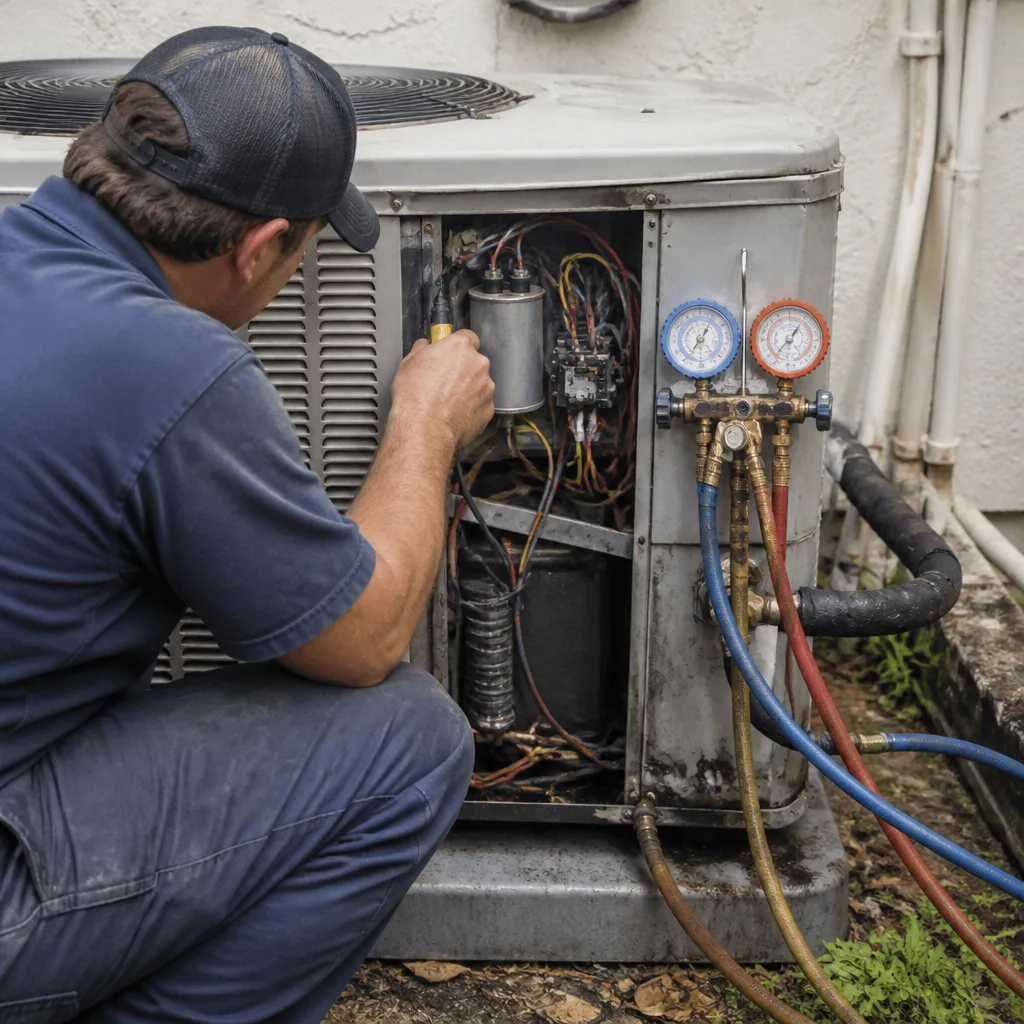 Before
 After
After Before
 After
After Before
 After
After