
 Furnace & heating
 AC repair
 Heat pumps
 Ductless mini splits
 Carrier
 Trane
Trane Goodman
Seasonal tune-up and full diagnostic on your Carrier, Trane, or Goodman system - readings shown to you before any repair is proposed
Diagnosis first, numbers second - you approve the repair price before a single part goes in.
Get your free estimateRheem Capacitor Replacement: The Orlando Owner’s Guide
A Rheem capacitor replacement in Orlando typically runs $150 to $450 installed, depending on whether it’s a single or dual-run capacitor and which Rheem model you have. We keep the most common Rheem capacitor sizes on our trucks, so in most cases a technician can have your system running the same day you call. The way Orlando owners usually discover a failed capacitor is simple: the outside unit hums but the fan doesn’t spin, or the compressor won’t kick on at all.
A capacitor is the electrical component that gives your compressor and fan motor the starting jolt they need. When it fails, the system stalls. Rheem uses capacitors in nearly every condenser and air handler they build, from the entry-level Classic series to the higher-end Prestige and Endeavor lines. If you’re hearing a low hum from the outside unit and nothing is turning, that’s the capacitor failing to deliver the start voltage, and it’s the most common mid-summer service call we run in this market.
Which Rheem Models This Applies To
This applies to essentially every Rheem central air conditioner and heat pump sold in the last 20 years, including the RA13, RA14, RA16, RA17, and the two-stage RA20 Prestige series. It also covers Rheem’s package units, common on Orlando ranches and older block homes where the entire system sits on a ground pad or small curb outside.
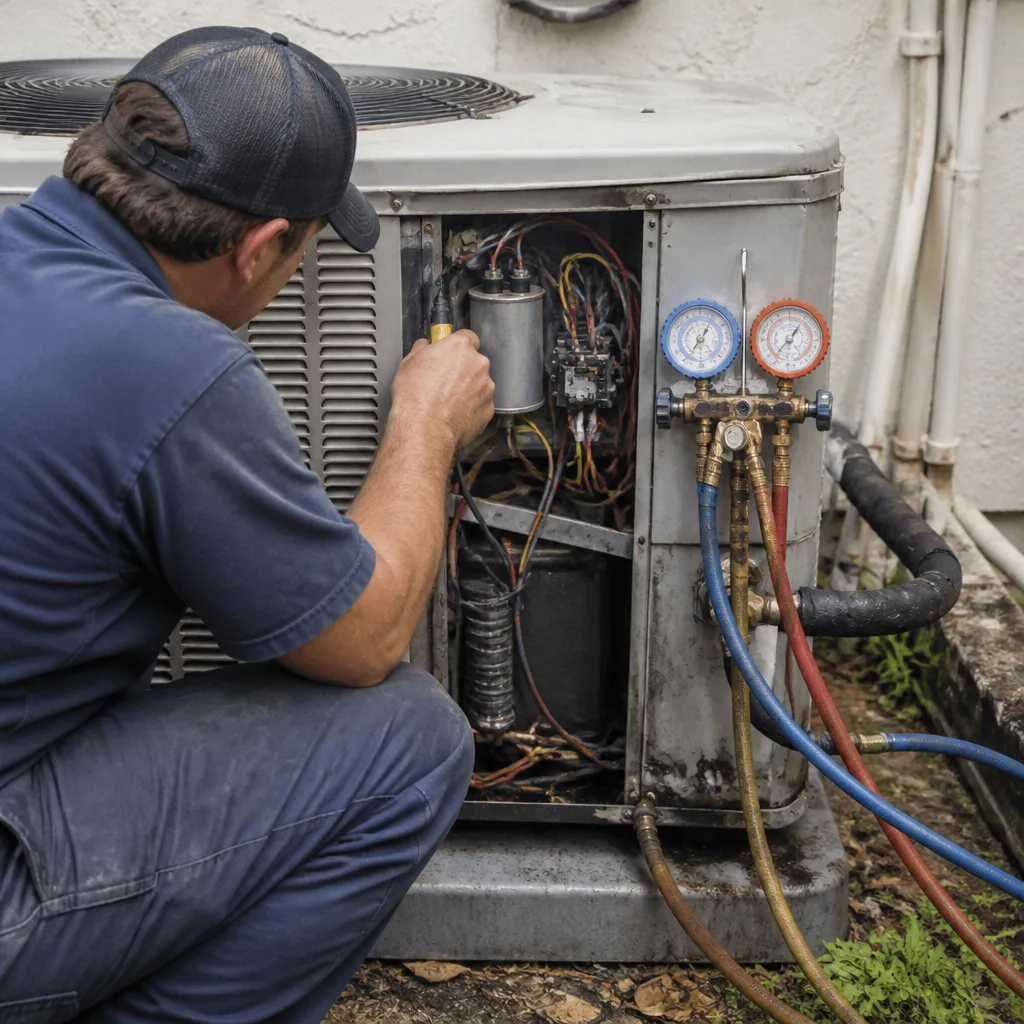
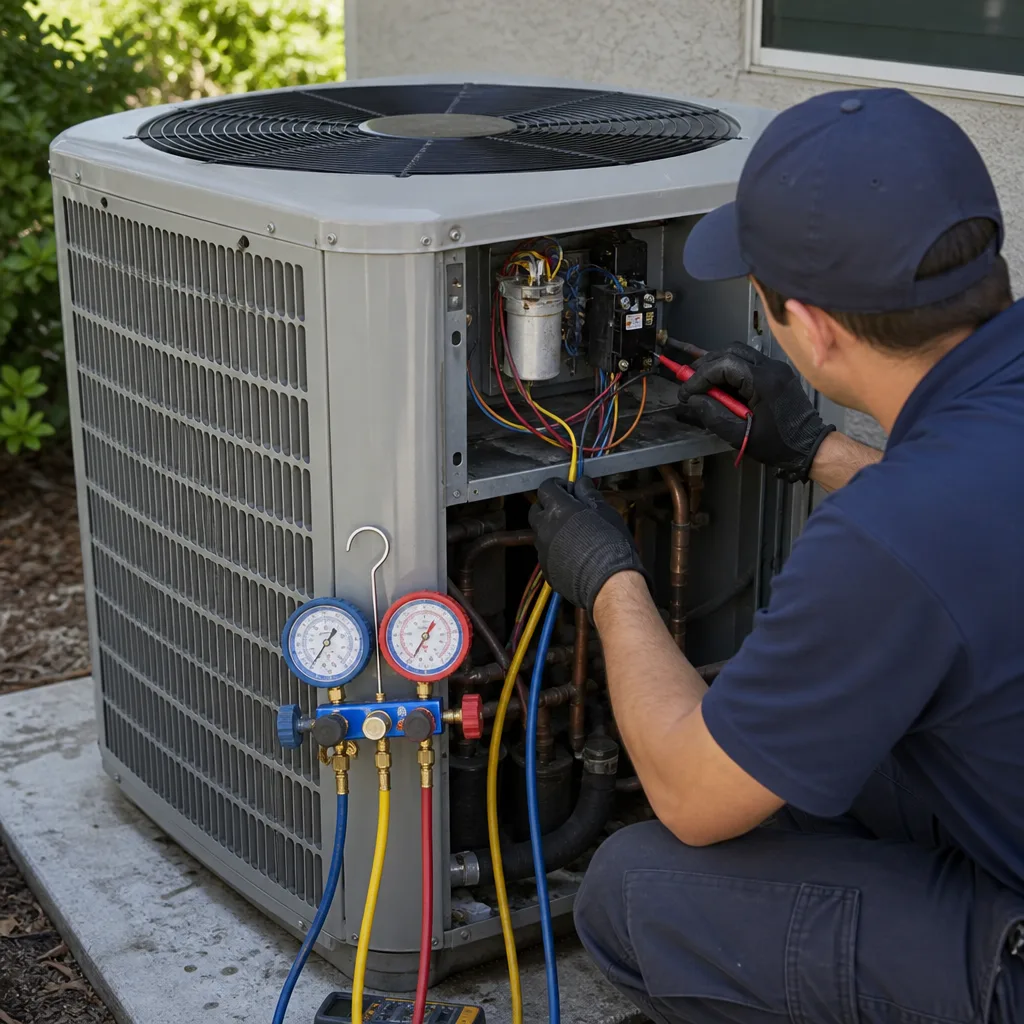
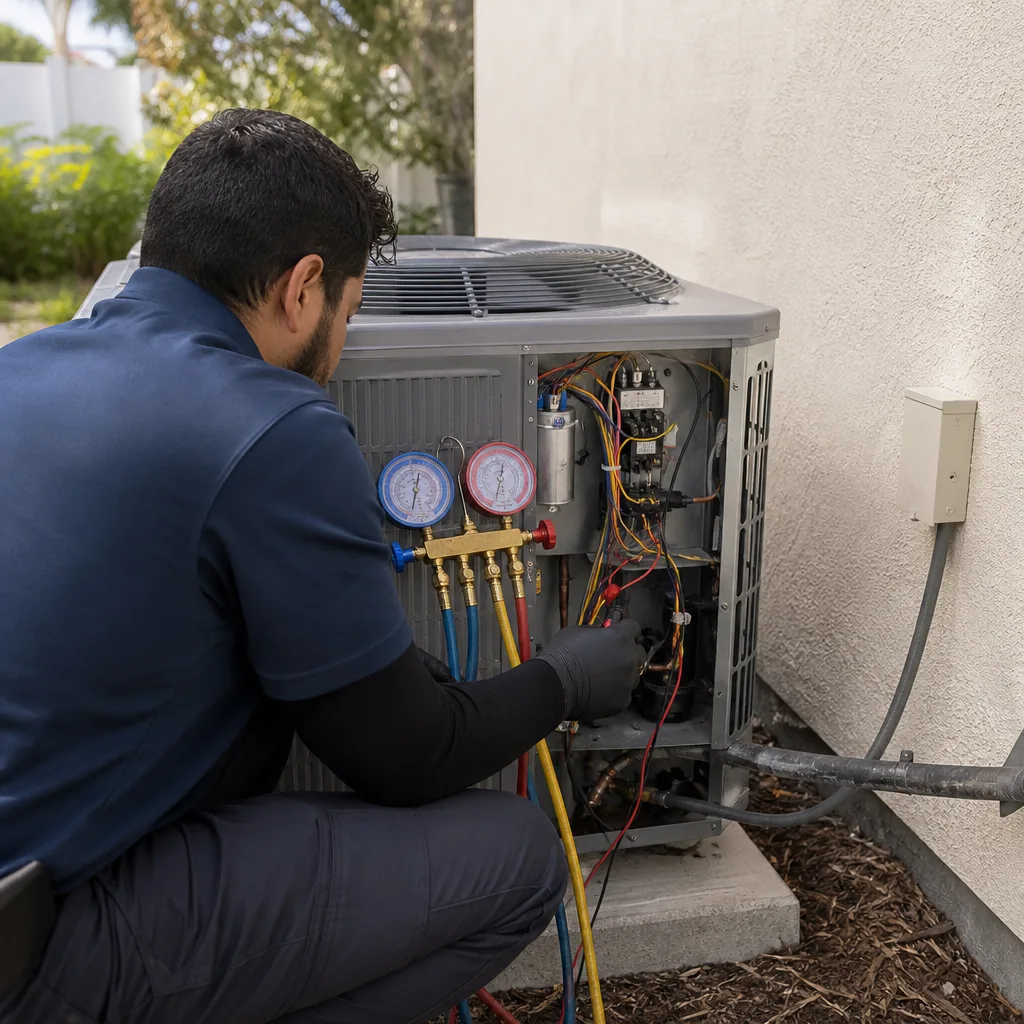
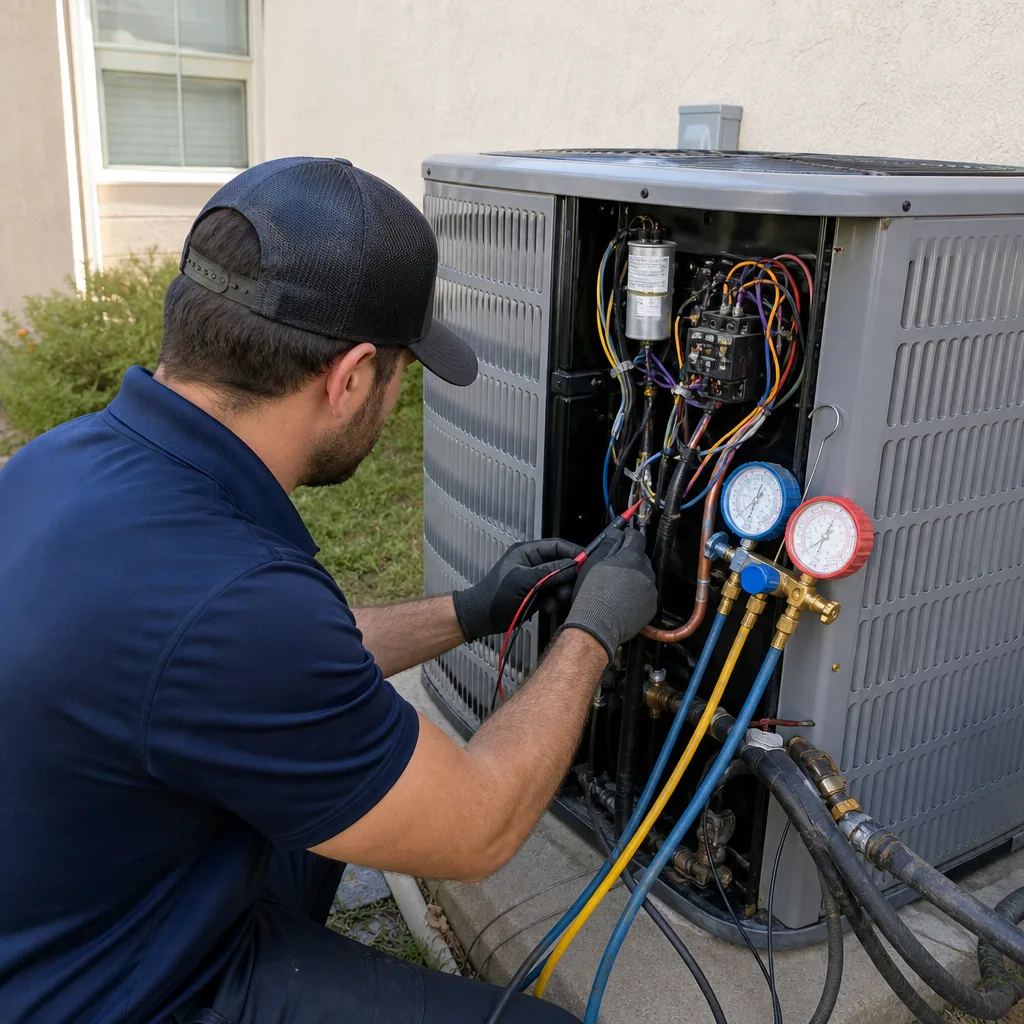
To identify your capacitor, open the electrical access panel on the outside condenser (with the disconnect pulled, which we’ll get to). The capacitor is a small cylinder, usually silver or gray, with a label showing microfarad ratings like 35/5, 40/5, 45/5, or 50/5. Rheem’s dual-run capacitors commonly fall in the 35/5 to 45/5 range for residential condensers, while larger 4- and 5-ton units may take a 50/5 or 55/5. The first number powers the compressor; the second number powers the condenser fan motor. Rheem is particular about matching these specs, and a capacitor that’s off by more than 5% of the labeled microfarads can shorten compressor life.
That’s the compatibility gotcha most online parts listings don’t tell you: a generic 45/5 from an online vendor might read 43/5 straight out of the box, which Rheem’s compressor tolerances will notice over time. We install capacitors in the correct OEM-spec range for your Rheem model, and we test the replacement’s actual output with a meter before wiring it in. For Rheem systems still under parts warranty, we can use OEM Rheem capacitors. For out-of-warranty units, we stock quality aftermarket equivalents from AmRad and Titan that meet or exceed Rheem’s original specs.
Styles & brands we work with
Signs Your Rheem Capacitor Replacement Is Failing
- Humming outside unit, nothing spinning. This is the classic. The capacitor has lost enough microfarads that it can’t deliver the burst of voltage the compressor needs to start. The contactor clicks, the unit hums, and then the thermal overload shuts it down.
- Air coming from the vents is warm. The capacitor may still be starting the fan motor but not the compressor. You get airflow, but no cooling, because the compressor never engages. This often gets misdiagnosed as a refrigerant leak.
- The fan spins slowly or needs a nudge. A weak capacitor can leave the condenser fan motor running at reduced speed. You might see the blades turning lazily at first, then stopping. In Orlando humidity, a slow fan means poor heat rejection and a compressor working harder than it should.
- Hard starting on hot afternoons. Capacitors degrade faster in heat, and Orlando’s summer attic and outdoor temperatures push them hard. If your Rheem struggles to start when the outdoor temp climbs past 95°F but runs fine at night, the capacitor is likely at the edge of its working range.
- Bulged or leaking capacitor housing. If you pull the access panel safely and see a capacitor that’s swollen at the top, oozing, or rusted around the seams, it’s failed or failing. Heat and voltage spikes cause the internal dielectric fluid to break down and expand the canister.
See the difference
 Before
 After
After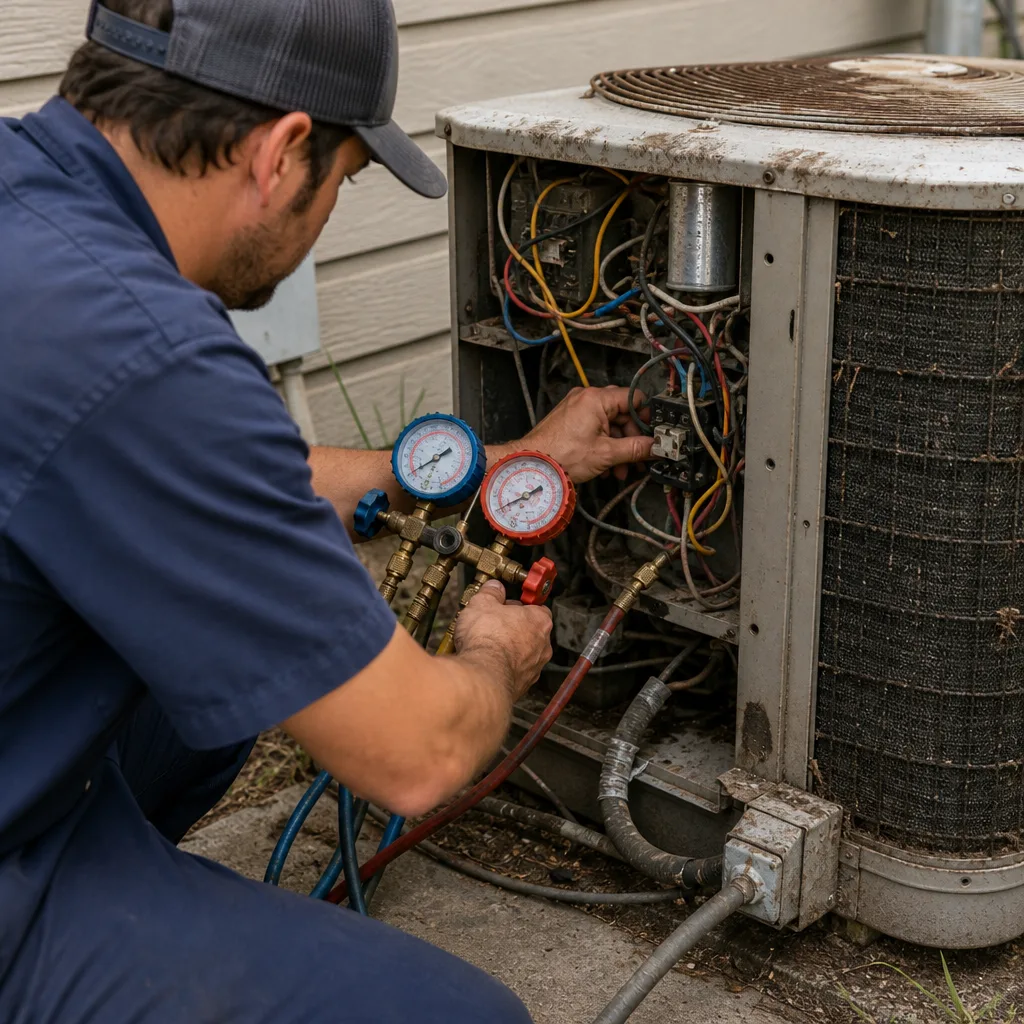 Before
 After
After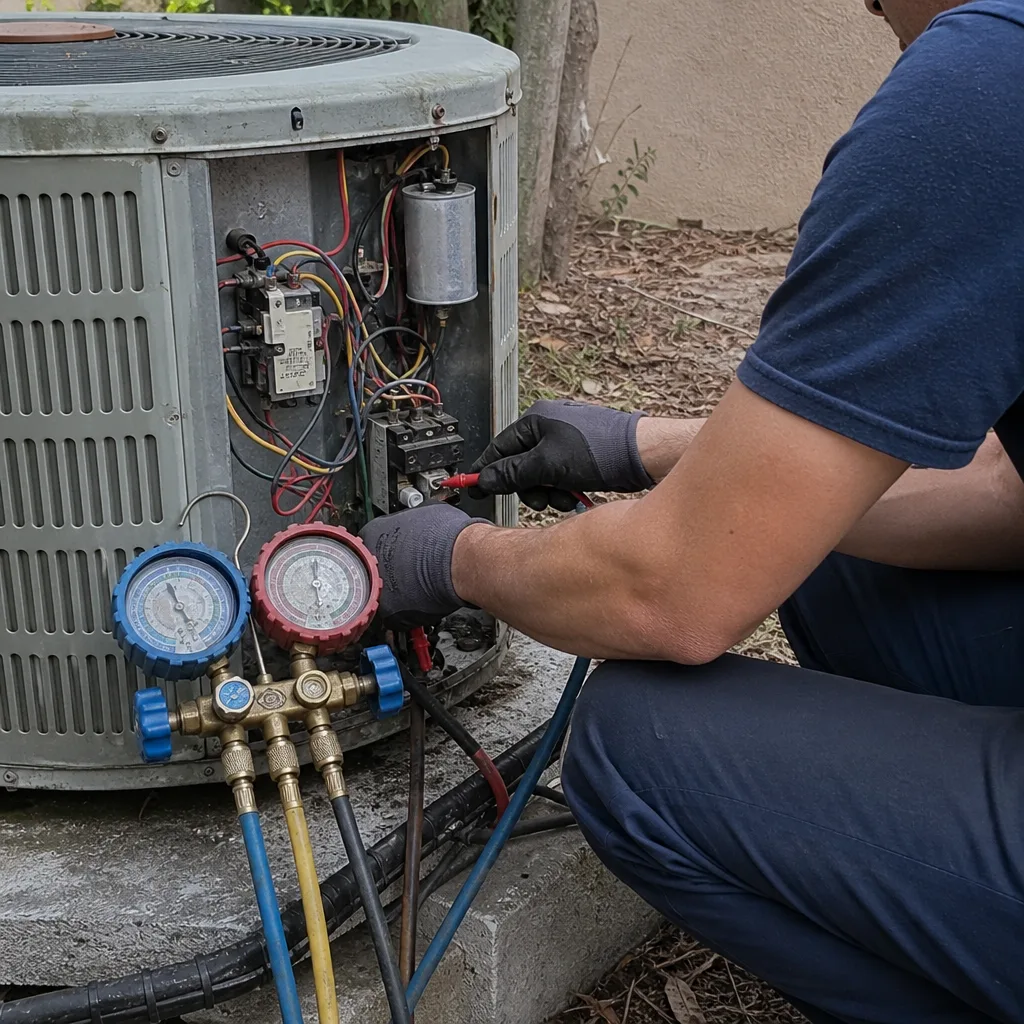 Before
 After
AfterReplacement Cost & What’s Included
In Orlando, a Rheem capacitor replacement with Meadowsweet Heating and Air runs between $150 and $450 for most residential systems. A single-run capacitor, which powers only the compressor and is common on older Rheem condensers with a separate fan capacitor, sits at the lower end of that range. A dual-run capacitor, which serves both the compressor and fan motor and is standard on most Rheem units from the last two decades, typically lands between $225 and $400 installed. Larger 5-ton systems or package units with harder-to-access electrical compartments may push toward $450.
That price includes the capacitor itself, the labor to safely pull the disconnect, discharge the old capacitor, wire in the new one, test actual microfarad output, and verify the whole system starts and runs correctly. We write the price down before we touch anything, and if we find additional issues, like a contactor that’s pitted or a fan motor drawing high amps, we’ll show you the finding and give you a separate price before doing more work. Every capacitor replacement is covered by the 365-Day Done Right Promise. If it’s not right within a year, we make it right.
DIY or Call Us?
A capacitor stores a serious electrical charge even with the power off. Touching the terminals without properly discharging it can result in a strong electrical shock, and that’s before you account for the 240-volt circuit feeding the condenser. This is not a part we recommend replacing yourself unless you have electrical training and the right tools. What you can safely do: check whether your breaker has tripped, make sure the thermostat is calling for cooling, and look for an obvious swollen capacitor housing if you’re comfortable pulling the disconnect, which kills power at the unit. Beyond that, this is a job for a trained technician with a discharge resistor and a meter.
Tell me what you’re hearing, and I’ll tell you what it’s going to cost, before we start. If you’re standing next to a humming Rheem condenser in the Orlando heat, call (850) 845-8659 and we’ll get someone out the same day. Our techs carry the common Rheem capacitor sizes on the truck, so one visit is usually all it takes.
FAQs
In Central Florida, a Rheem capacitor typically lasts 5 to 10 years, but Orlando’s heat and frequent thunderstorms shorten that lifespan compared to cooler climates. The combination of high outdoor temperatures, voltage spikes from lightning activity, and near-constant summer runtime ages capacitors faster here than almost anywhere else in the country. If your Rheem system is past the 7-year mark and you’re noticing hard starts, a proactive replacement at our standard service rate is cheaper than an emergency call.
No. A capacitor is a sealed electrical component, and once it fails, there’s no practical repair. The internal dielectric fluid breaks down, and the unit is done. Replacement is the only option. The good news is that capacitors are among the least expensive parts in your Rheem system, and the repair is typically under an hour. Call (850) 845-8659 for a firm quote before we start.
A Rheem capacitor replacement usually takes 30 to 60 minutes from arrival to a running system. That includes pulling the disconnect, safely discharging the old capacitor, installing and testing the new one, and cycling the system to confirm proper startup. Most Orlando appointments for this repair are completed in a single visit the same day you call.
Yes. Our techs stock the most common Rheem capacitor sizes, including 35/5, 40/5, 45/5, and 50/5 dual-run units, along with single-run capacitors for older Rheem condensers. We also carry compatible quality aftermarket capacitors from AmRad and Titan, and we test every one with a meter before wiring it in. For less common sizes, we can typically source the part same day from local Orlando supply houses.
They fail for different reasons, but both live in the same electrical compartment and both are wear items. A contactor, the switch that sends power to the compressor and fan, can pit over time from arcing. If the contactor is visibly pitted or scorched, replacing both at once avoids a second service call. If the contactor looks clean and tests fine, there’s no need to spend the money. We’ll show you what we see and give you a price for either route before work starts.
Rheem’s standard parts warranty, often 5 or 10 years depending on the model and registration date, may cover the capacitor if the unit is still in warranty and the part is confirmed defective. We handle the paperwork and replace it with an OEM Rheem part when warranty applies. For out-of-warranty units, we use quality aftermarket capacitors that meet Rheem’s specifications. Either way, the labor and the 365-Day Done Right Promise are on us to explain clearly before we begin.
Written by Luis Serrano, Owner, Meadowsweet Heating and Air Orlando at Meadowsweet Heating and Air Orlando, serving Orlando and nearby areas.