
 Furnace & heating
 AC repair
 Heat pumps
 Ductless mini splits
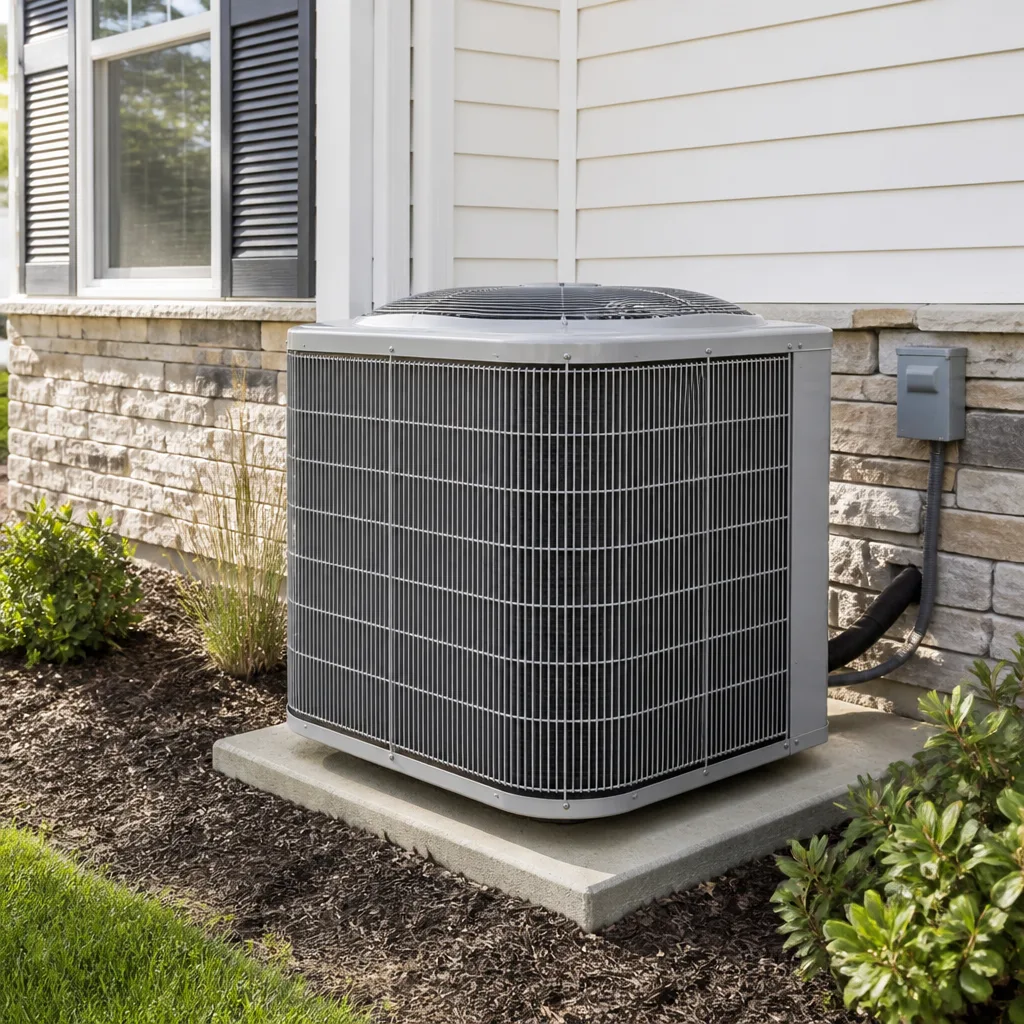 Carrier
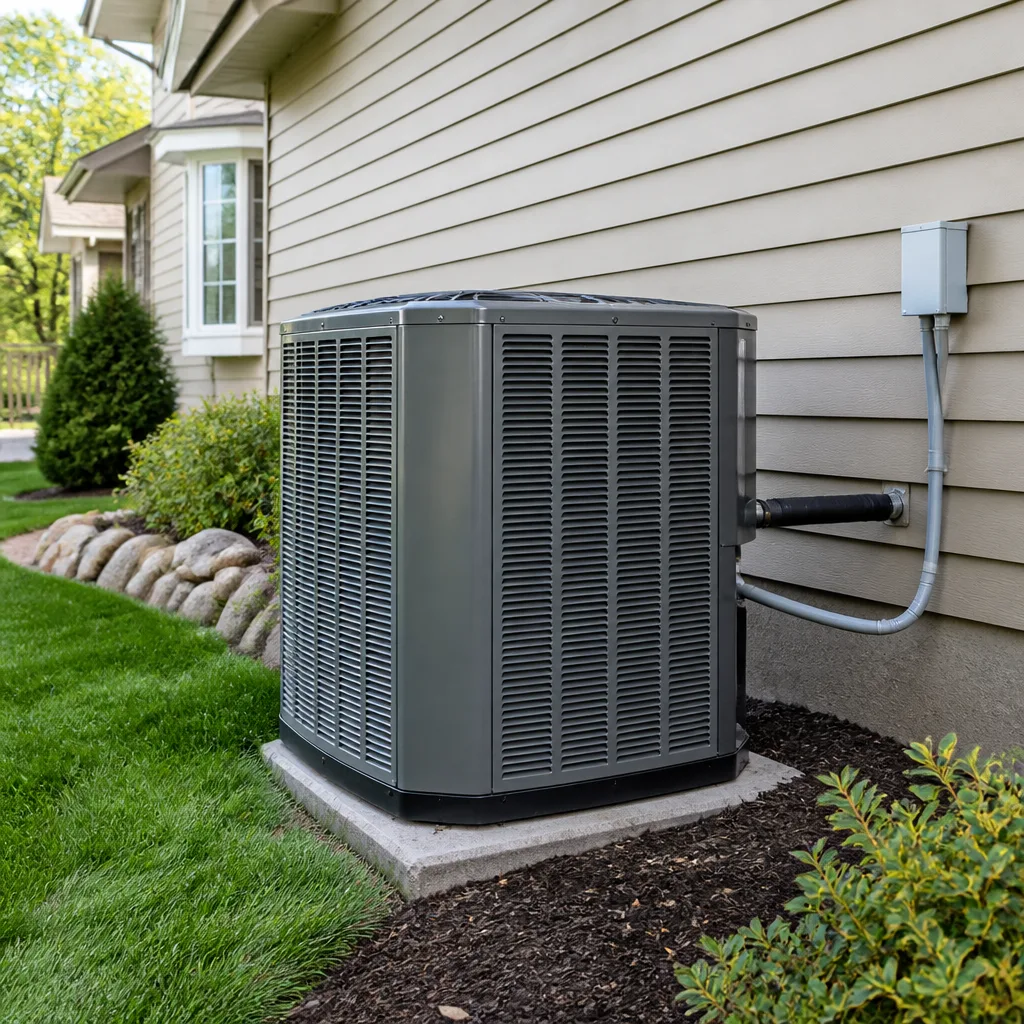 Trane
Trane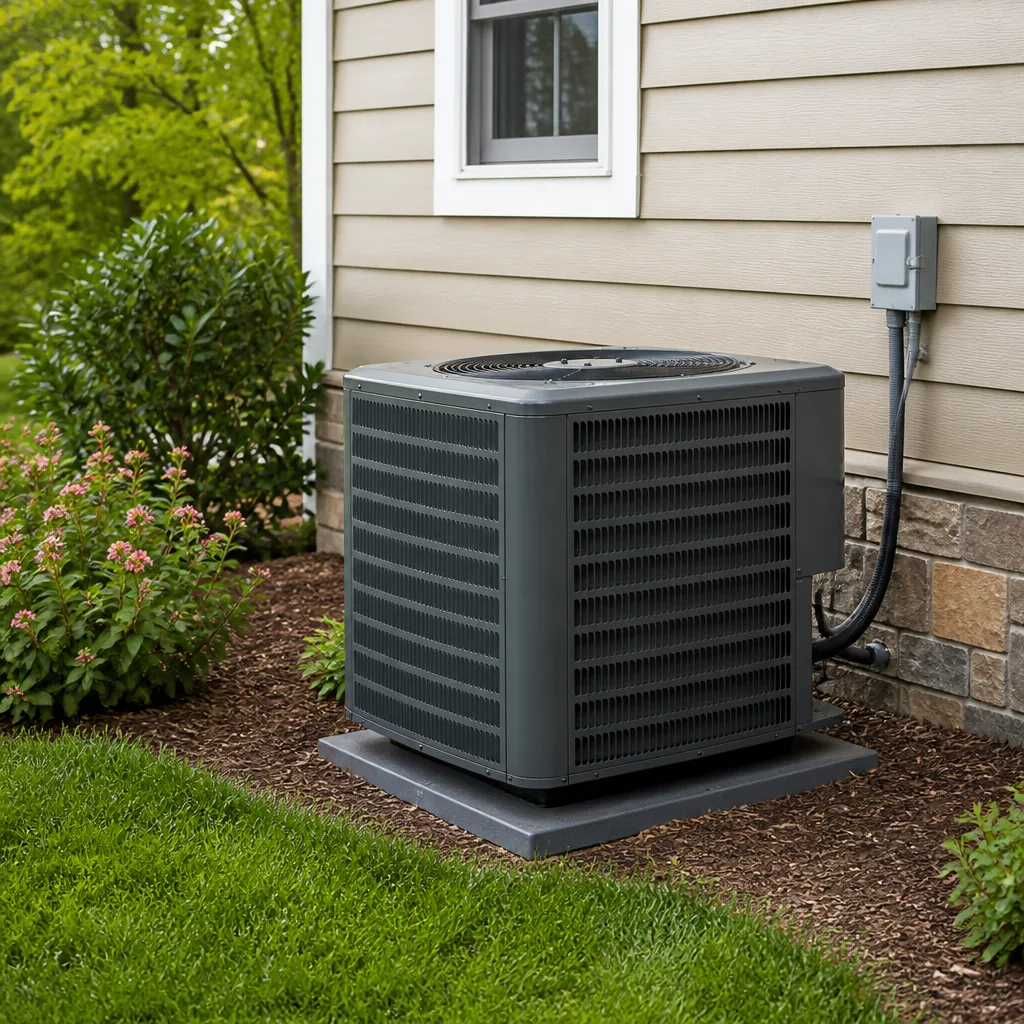 Goodman
Seasonal tune-up and full diagnostic on your Carrier, Trane, or Goodman system - readings shown to you before any repair is proposed
Diagnosis first, numbers second - you approve the repair price before a single part goes in.
Get your free estimateCarrier Capacitor Replacement: The Orlando Owner’s Guide
A Carrier capacitor replacement in Orlando typically runs $180 to $340 installed, depending on whether it’s a single or dual-run capacitor and which Carrier model you have. We stock Carrier-compatible capacitors on our trucks, so most swaps happen the same day we diagnose the problem. Most Orlando homeowners discover a failed capacitor when the outside unit hums but the fan won’t spin, or the system runs for a few minutes and shuts off without cooling the house.
Here’s the thing about capacitors in Central Florida: they’re one of the most common parts to fail in a Carrier system, and they rarely give much warning. One day the AC is keeping your living room at 74, and the next afternoon the condenser sits there buzzing while the house climbs past 80. If you’re standing next to the unit hearing that low hum, that’s usually the compressor trying to start without the electrical push it needs.
Which Carrier Models This Applies To
Carrier uses run capacitors across nearly every residential split system, from the Comfort Series (models like the 24ABC6 and 24ACC6) up through the Performance and Infinity lines (24ANB1, 24ANB7, 25VNA8, and similar). The part you need depends on two things: the microfarad (µF) rating printed on the old capacitor’s label and whether your system uses a single capacitor for the compressor or a dual-run capacitor that serves both the compressor and the outdoor fan motor.
Here’s the compatibility gotcha most Orlando owners run into: Carrier dual-run capacitors commonly come in ratings like 35/5 µF, 40/5 µF, 45/5 µF, and 45/7.5 µF at 370 or 440 volts. You can’t swap a 370-volt capacitor for a 440-volt one on paper, but the reverse is fine. A 440V capacitor rated for the same microfarads works safely in a system originally built for 370V. It’s a common upgrade path in Orlando, where summer heat and afternoon lightning storms push older capacitors past their limits. If you’re unsure which rating your system needs, snap a photo of the label on the old capacitor before calling. That single photo saves a second trip.
On OEM versus aftermarket: Carrier-branded capacitors are made to spec, but the aftermarket options from suppliers like Titan HD and AmRad are widely used in our area and often carry a five-year manufacturer warranty. The real difference isn’t the brand on the label. It’s the build quality and heat tolerance. In Orlando’s climate, we lean toward capacitors rated for 440V even when the original was 370V, because the extra headroom means the part runs cooler and lasts longer. That’s not an upsell. It’s the parts experience talking.
Styles & brands we work with
Signs Your Carrier Capacitor Replacement Is Failing
- The outside unit hums but the fan doesn’t spin. The capacitor is supposed to give the fan motor and compressor their starting jolt. When it’s dead or weak, the motor just sits there buzzing. If you hear this, shut the system off at the thermostat and the breaker. Letting it hum heats up the motor windings fast.
- The system short-cycles, on for a few minutes, then off. A weak capacitor can sometimes get the compressor running but can’t keep it running smoothly. The system trips its own thermal protection and shuts down. Your house never actually reaches the temperature on the thermostat.
- The air coming from the vents is warm or barely cool. If the compressor isn’t running at full speed, it can’t pump refrigerant properly. The indoor blower keeps pushing air, but that air isn’t cold. Orlando families usually notice this in the late afternoon, when the outside unit has been baking in direct sun all day.
- The outdoor fan spins slowly or struggles to start. A dual-run capacitor feeds both the fan motor and the compressor. When it starts to fail, the fan side often goes first. You might see the blades turning lazily instead of with a sharp, full-speed spin. That slow spin means less heat being pulled off the condenser coils.
- Your energy bill climbs without an obvious reason. A failing capacitor makes the compressor and fan work harder to do the same job. In Orlando, where AC runs from March through November, two or three months of reduced efficiency shows up as a bill that’s 10 to 20 percent higher than the same months last year.
Replacement Cost & What’s Included
For a Carrier capacitor replacement in Orlando, expect to pay $180 to $340 as the full installed price. A straightforward single-capacitor swap on an accessible unit sits at the low end. A dual-run capacitor on an Infinity or Performance series system, especially one mounted in a tight condenser cabinet, lands at the higher end. The price you get from us is the price you pay. Written down before any work starts. No trip charge games, no “while we’re in there” add-ons.
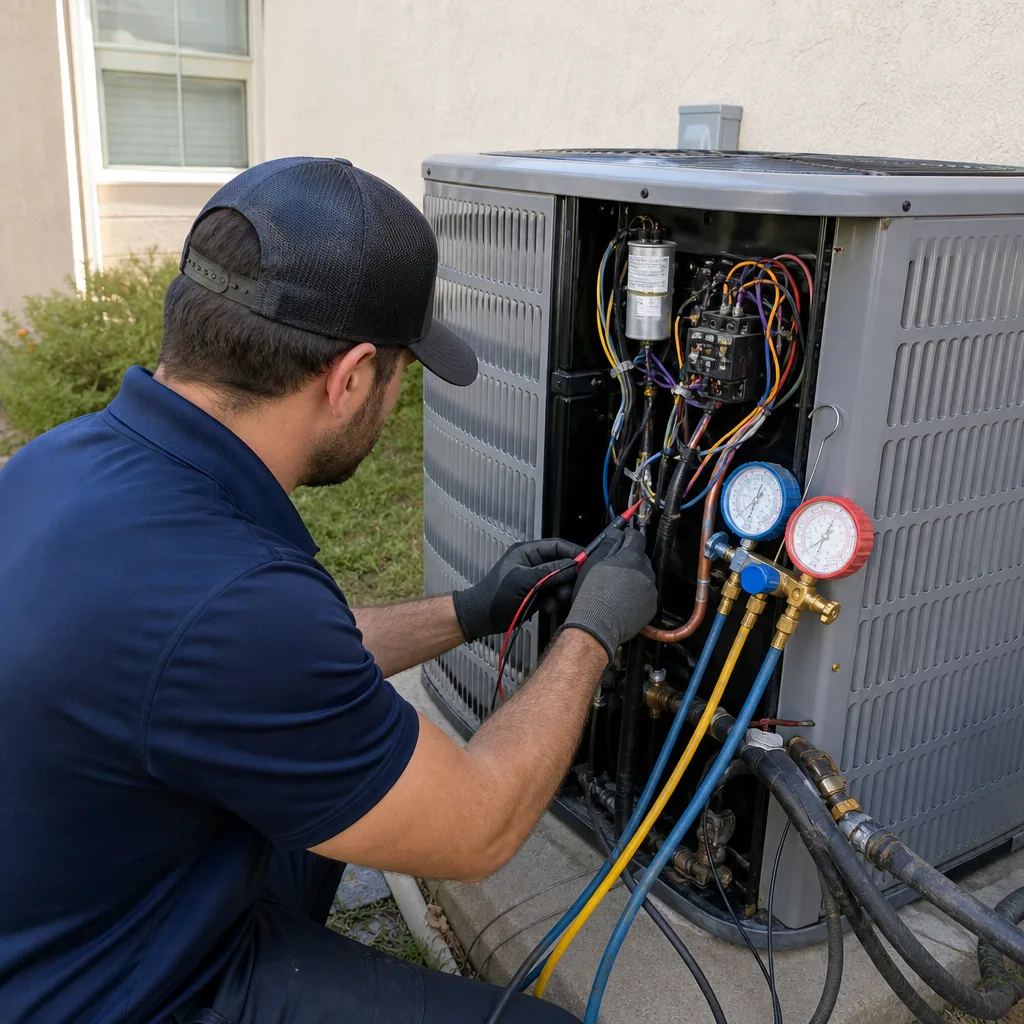
That installed price includes the capacitor itself, the labor to swap it, a quick check of the contactor and wiring while we’re in the cabinet, and our 365-Day Done Right Promise. If the capacitor fails inside a year, we replace it and re-check the system at no charge. We also confirm the new capacitor’s microfarad rating matches what the Carrier compressor actually needs, not just what the old one said. Burned-out capacitors sometimes fail because they were the wrong rating to begin with.
See the difference
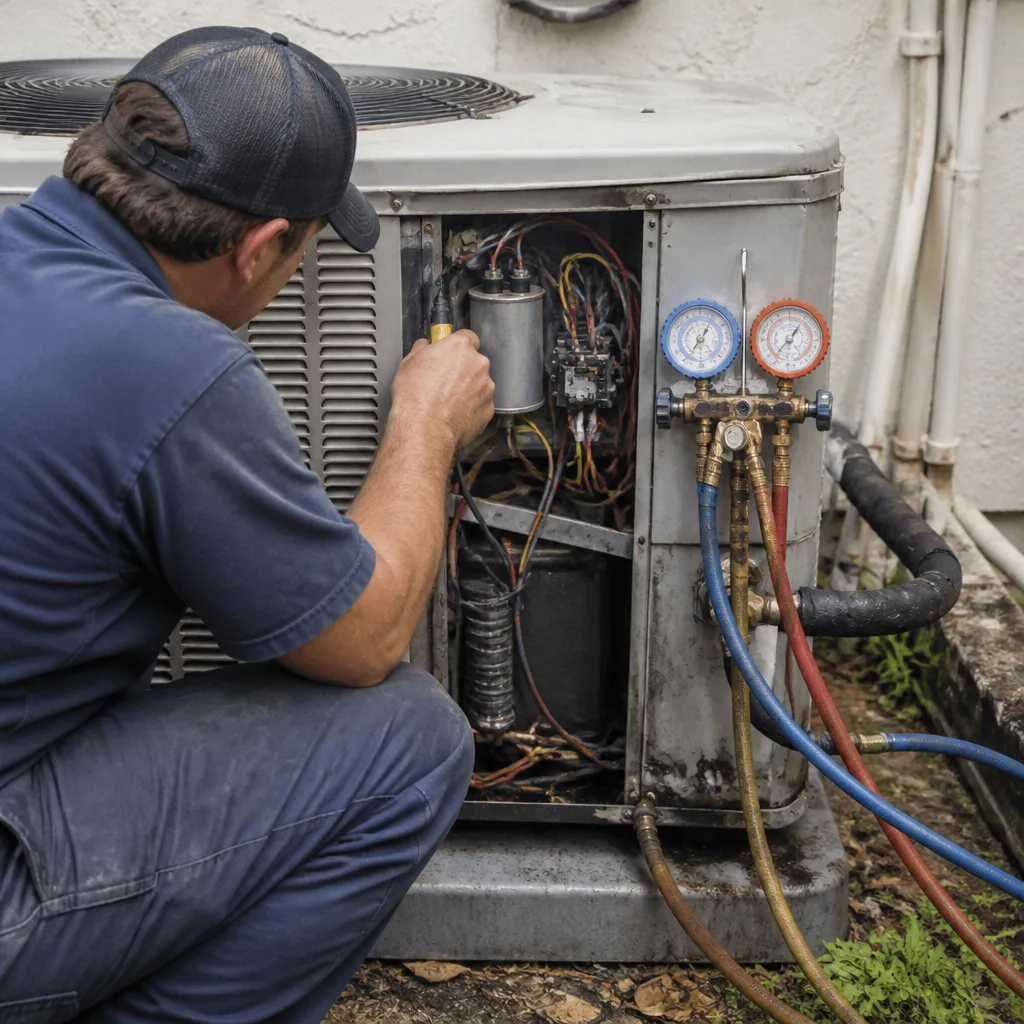 Before
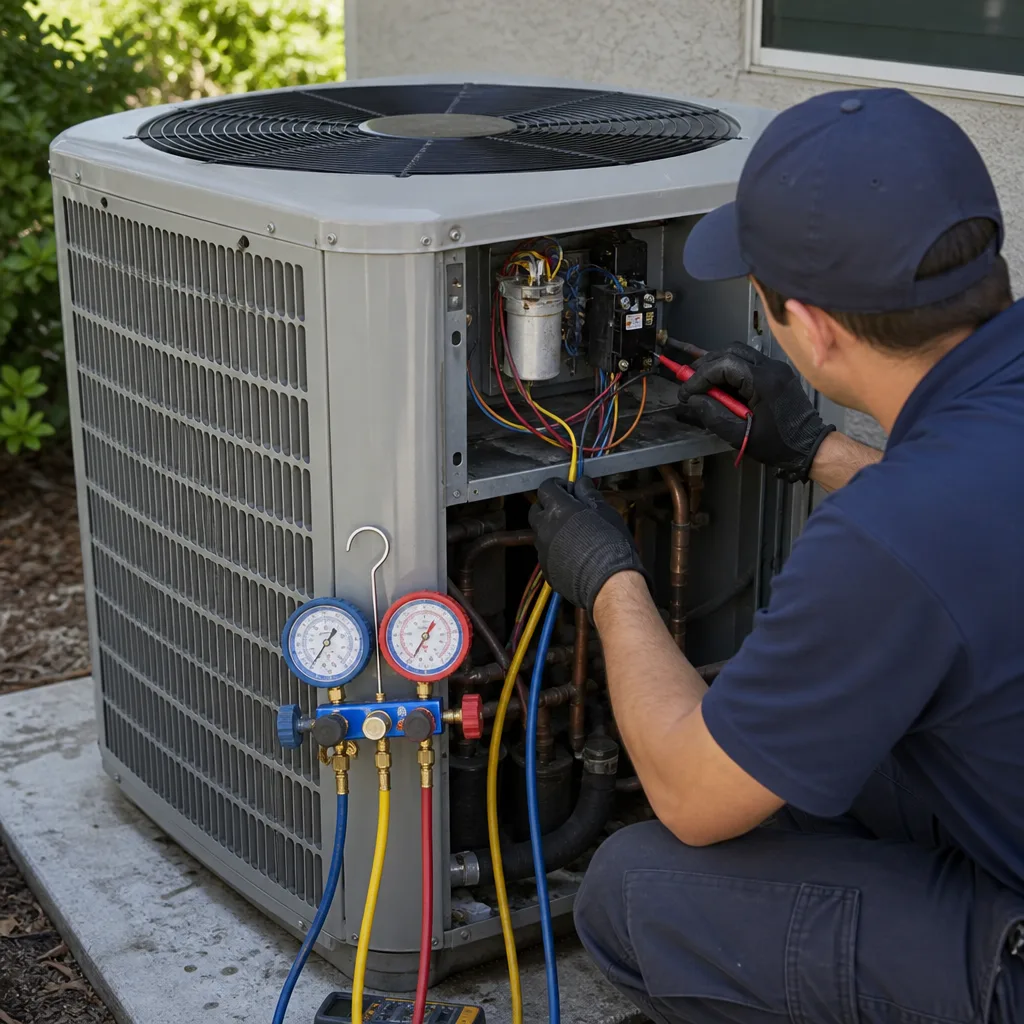 After
After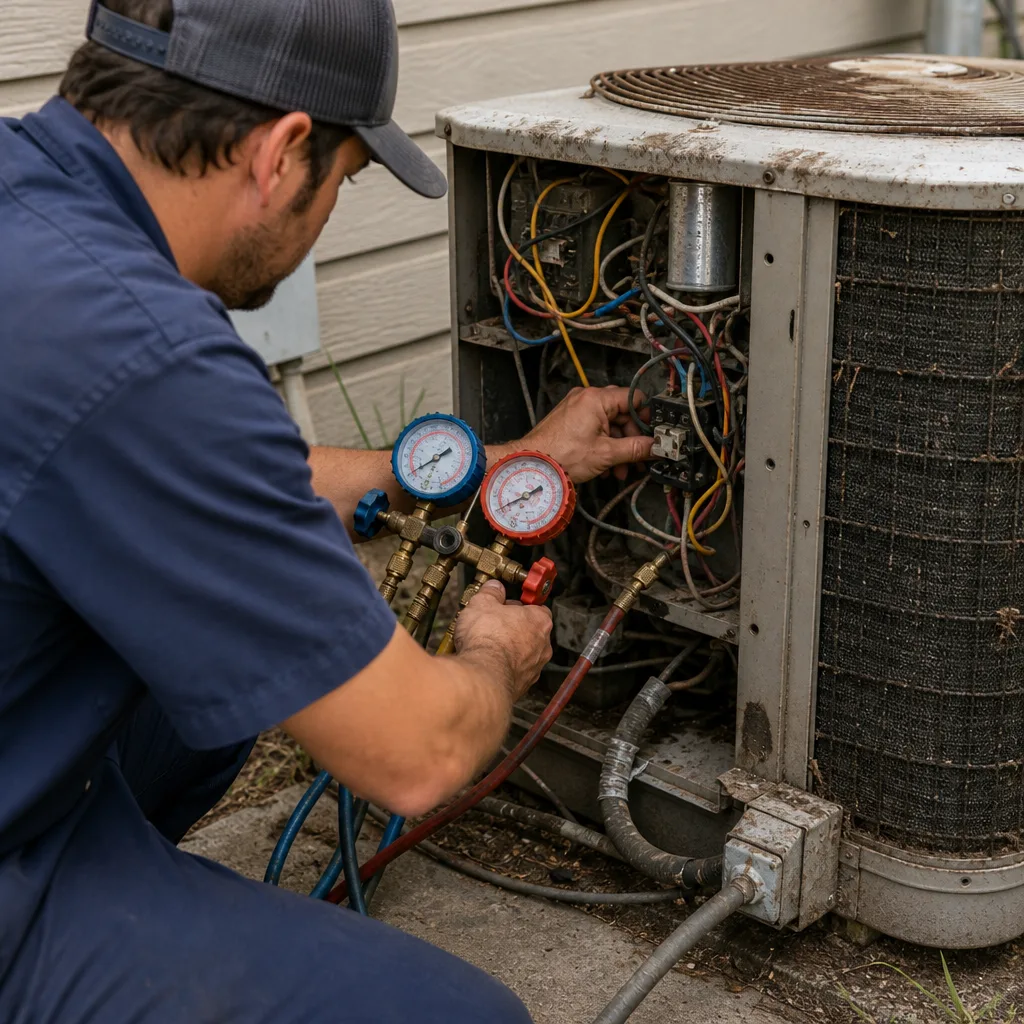 Before
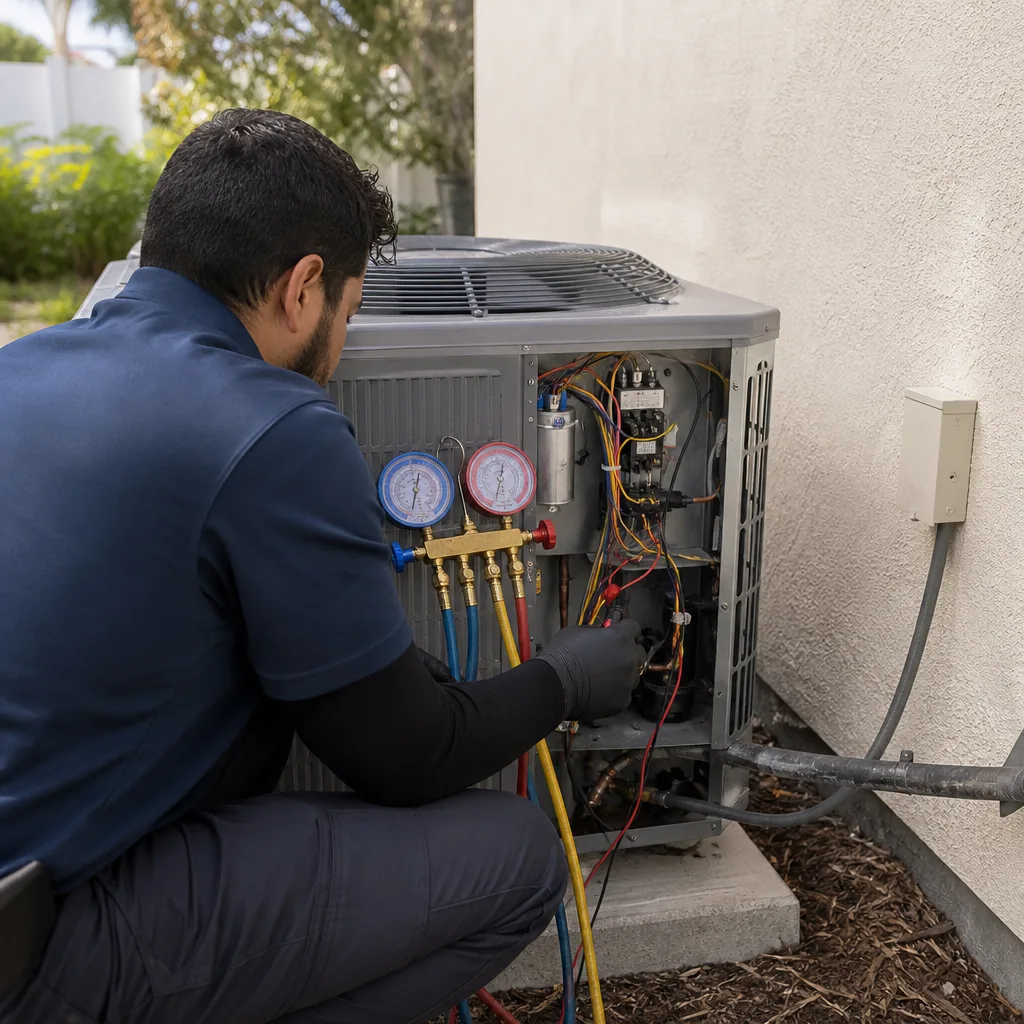 After
After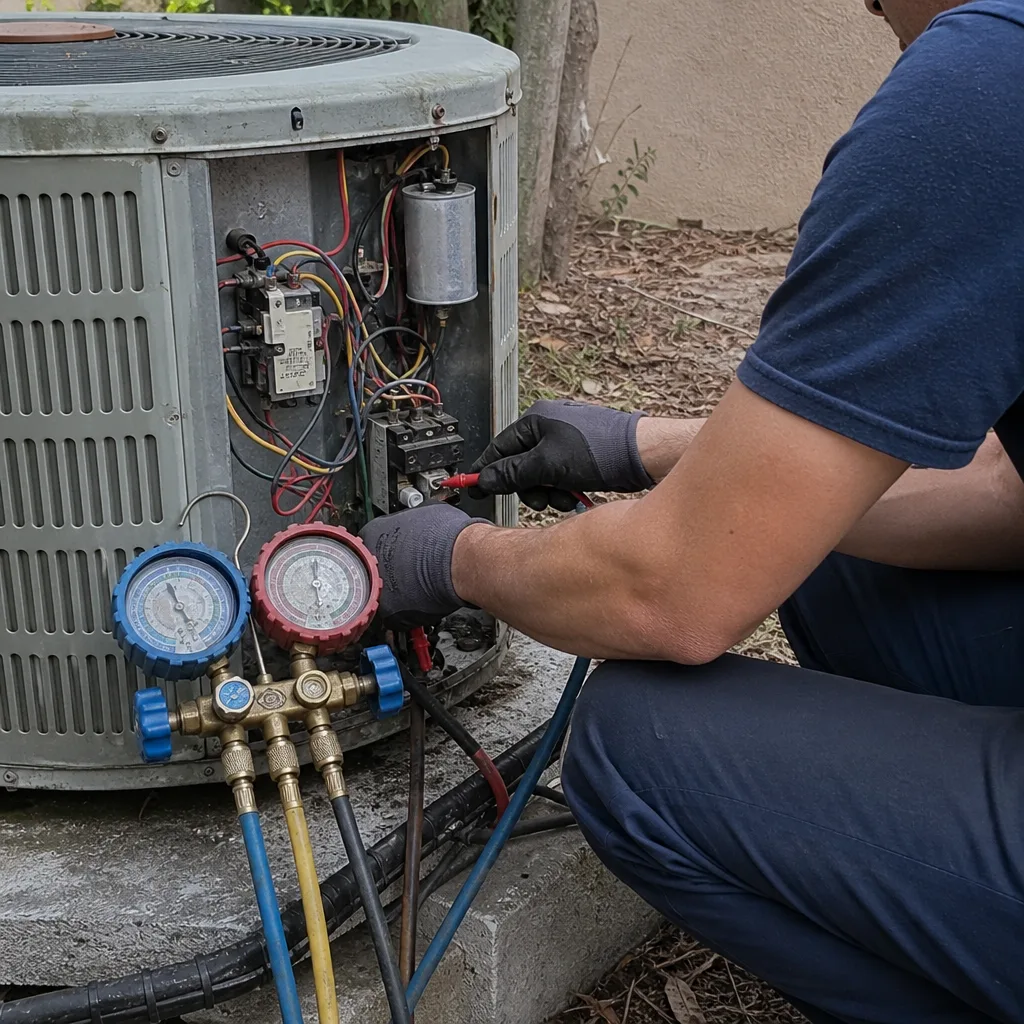 Before
 After
AfterDIY or Call Us?
Let’s be direct about this: capacitors store electrical charge even when the power is off. That’s their job. A charged capacitor can deliver a serious shock if you touch the wrong terminals, which is why this isn’t a DIY-friendly part for most homeowners. The capacitor in your Carrier condenser holds enough voltage to hurt you. That’s not scare language; it’s the reason we train our techs to discharge these safely before they touch anything else in the cabinet.
What you can safely do is gather information. Take a photo of the capacitor’s label. Note the model and serial number from the Carrier data plate on the back of the condenser. Check whether the breaker for the AC is tripped. Then call us at (850) 845-8659 and tell us what you’re seeing and hearing. Luis and the crew will give you a straight answer and a written price before anyone picks up a screwdriver. That’s how we work, and it’s how we’ve always worked.
Carrier Capacitor Replacement FAQs
A Carrier capacitor in Orlando typically lasts 5 to 8 years, though we’ve seen them fail in as little as three when the condenser sits in full afternoon sun or the system runs nearly year-round. Heat and electrical surges from summer storms are the two big lifespan killers for capacitors in Central Florida. If your capacitor is past the five-year mark and the system is acting up, it’s usually the first suspect.
No. Capacitors are sealed, factory-made components. There’s no practical way to repair one, and any attempt to open and patch a capacitor is dangerous. Replacement is the standard fix, and at $180 to $340 installed in Orlando, it’s one of the more affordable AC repairs you’ll ever authorize. Call (850) 845-8659 and we’ll confirm the diagnosis before we quote the work.
Most Carrier capacitor replacements take 30 to 60 minutes from the time we arrive at the outside unit to the time we test the system. That includes discharging the old capacitor, swapping in the new one, tightening connections, and watching the compressor and fan come up to speed. The power stays off for about 15 minutes during the actual swap.
Yes, we keep common Carrier-compatible dual-run capacitors in 35/5, 40/5, 45/5, and 45/7.5 µF ratings on our trucks, plus several single-run options. We also stock parts for Trane and Lennox systems. If your system needs an uncommon rating, we can usually source it the same day from our local Orlando supply network and still get you cooling before evening.
Meadowsweet Heating and Air Orlando is an independent service provider and is not affiliated with Carrier Corporation. We do the same work with the same parts, but the name on our truck is our own.
When to Call Meadowsweet Heating and Air Orlando
If your Carrier AC is humming, short-cycling, or blowing warm air through the vents in Orlando, call us at (850) 845-8659. We’ll listen to what you’re describing, ask for the photo of the capacitor label if you have one, and give you a written price before any work starts. Our technicians show up in uniform, wearing shoe covers and laying drop cloths where they work. If you have kids napping or a dog in the back yard, tell the dispatcher and we’ll keep the noise and the foot traffic where they need to be. The goal is a system that cools again, done right the first time, with the house left looking like we were never there except for the colder air.
Customer Care Contact: For immediate service or a free estimate, call (850) 845-8659.
Written by Luis Serrano, Owner, Meadowsweet Heating and Air Orlando at Meadowsweet Heating and Air Orlando, serving Orlando and nearby areas.